Is AI Truly 'Paying You'? A Concrete Framework to Quantify Costs, Time Saved & Real ROI for Solopreneurs
Is AI Truly 'Paying You'? A Concrete Framework to Quantify Costs, Time Saved & Real ROI for Solopreneurs
Are you paying hundreds of dollars monthly for AI tool subscriptions while your schedule remains choked with 14-hour workdays? Discover how to transition from a casual tool experimenter into an AI ecosystem architect generating tangible surplus cash flow.

01 The 'Subscription Stacking' Craze & The Solopreneur Overwhelm Paradox
I often hear candid confessions from fellow content creators, financial consultants, independent traders, and small business owners: "Jennie, I've subscribed to everything—ChatGPT Plus, Claude Pro, Midjourney, and AI video generators—yet I'm glued to my screen from 8 AM till midnight while my revenue remains completely flat?"
The candid, answer-first reality is: AI tools possess no intrinsic ability to generate money on their own; only structured operating systems rigorously audited by financial ROI produce measurable economic surplus. If you merely treat AI as an ad-hoc playground where you copy-paste random prompts seen on social feeds, you do not possess an automation leverage engine—you have simply accumulated monthly software liabilities.
"A solopreneur's true financial sovereignty is never measured by how many shiny AI apps clutter their desktop, but by the operational hours liberated from repetitive drudgery while recurring cash flow continues to compound."
02 Three Dangerous Illusions: Why AI Doesn't Automatically Make You Rich
To determine whether AI is truly 'paying your wages' or silently draining your bank account every billing cycle, let us dissect the 3 pervasive illusions trapping 85% of independent operators:
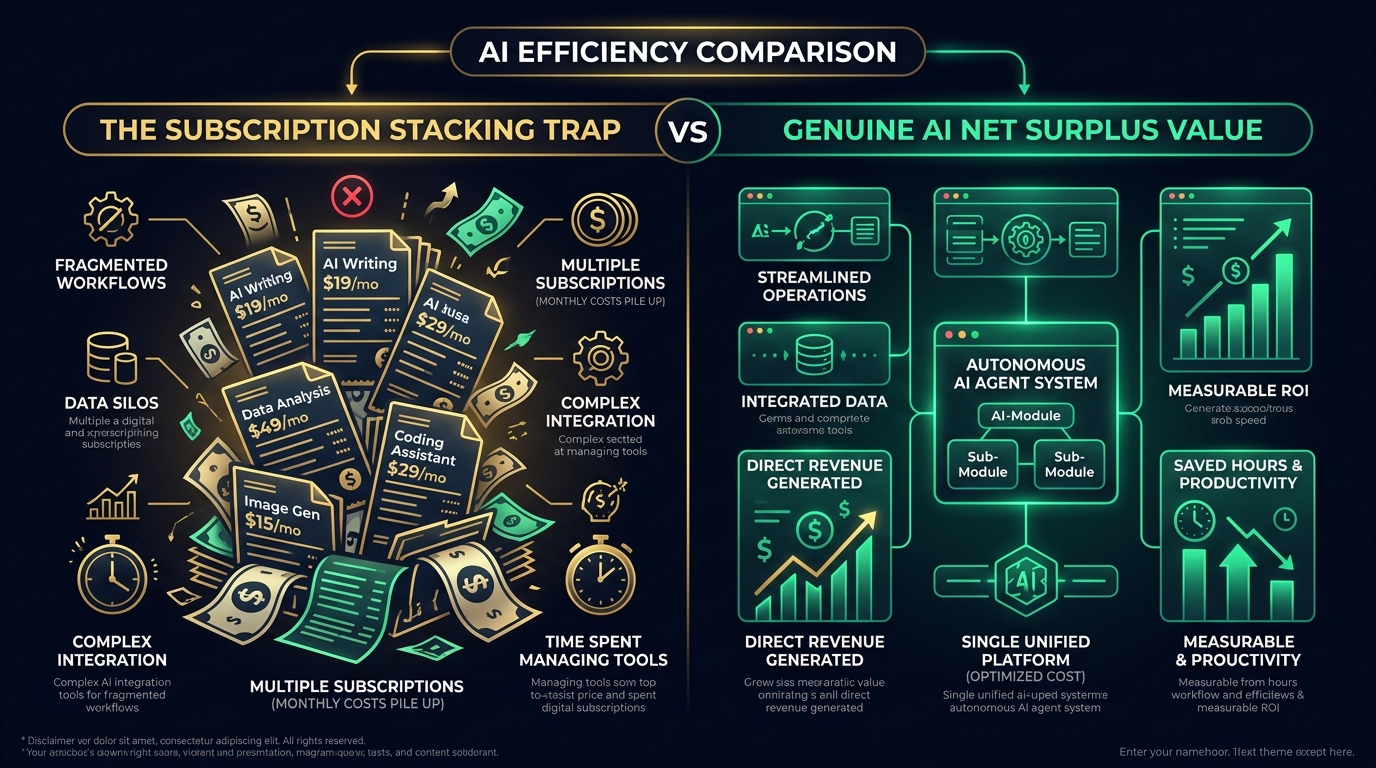
Illusion 1: Equating 'Prompt Output Volume' with 'Economic Surplus Value'
Many pride themselves on churning out 50 social posts or 20 AI graphics daily. Yet, if those 50 assets are unlinked from a coherent conversion funnel, address zero genuine customer pain points, and yield zero orders, every minute and token spent represents pure economic waste.
Illusion 2: Ignoring the Hidden Cost of 'Manual Review Drudgery'
An LLM takes 10 seconds to generate a report, but you spend 45 tedious minutes rewriting robotic phrasing, fact-checking fabricated citations, and fixing formatting errors. Your opportunity cost skyrockets beyond what manual production would have cost without a standardized SOP.
Illusion 3: The Subscription Stacking Quagmire
$20 for copywriting, $30 for image generation, $50 for video avatars, $40 for workflow zaps... Monthly software tolls easily exceed $200-$300 across fragmented silos that cannot share context, turning you into a glorified manual copy-paste clerk between browser tabs.
03 Financial ROI Mathematical Formula & The 4 Levels of AI Maturity
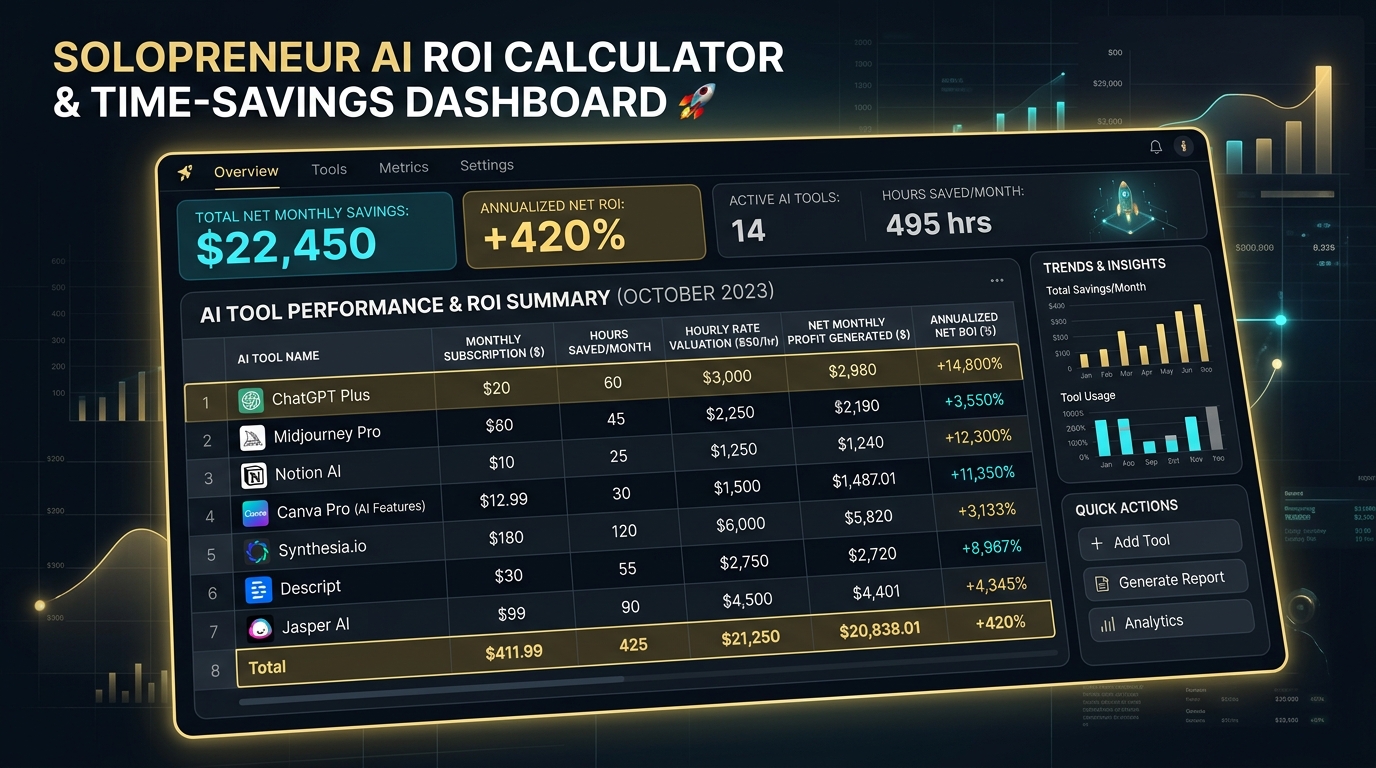
In institutional financial governance, every operational asset must defend its capital allocation. I have synthesized the definitive Solopreneur AI Financial ROI framework modeled below:
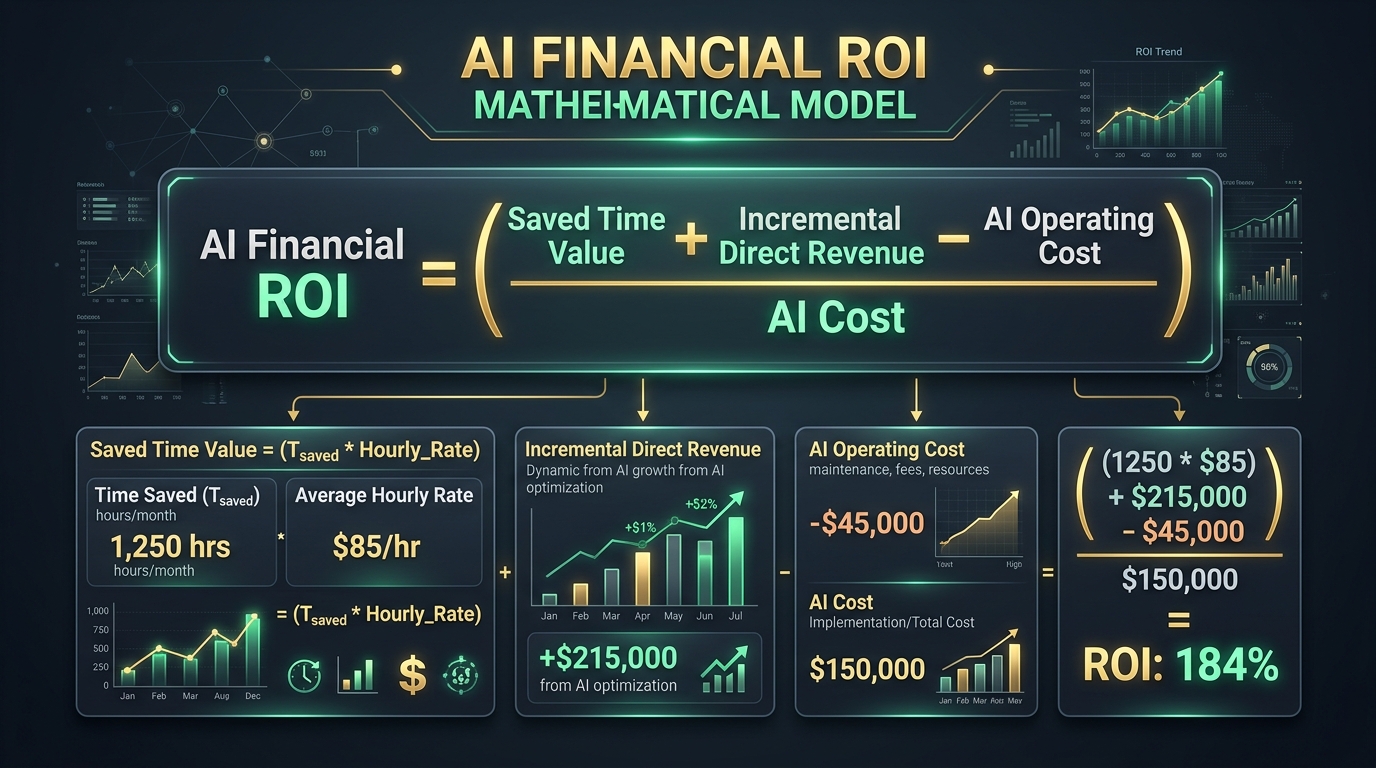
Concrete Real-World Case Study: Suppose you invest ₫1,000,000/month in AI tooling. Through structured automation, you reclaim 30 repetitive operational hours (conservatively valued at ₫200,000/hr = ₫6,000,000) and capture 1 additional client engagement worth ₫2,000,000. Net surplus generated equals ₫7,000,000, representing a staggering 700% Net ROI. At this point, AI is genuinely 'paying your salary' and expanding your net worth.
The 4 Levels of Solopreneur AI Automation Maturity
Audit your current operational maturity against the four progressive tiers below:
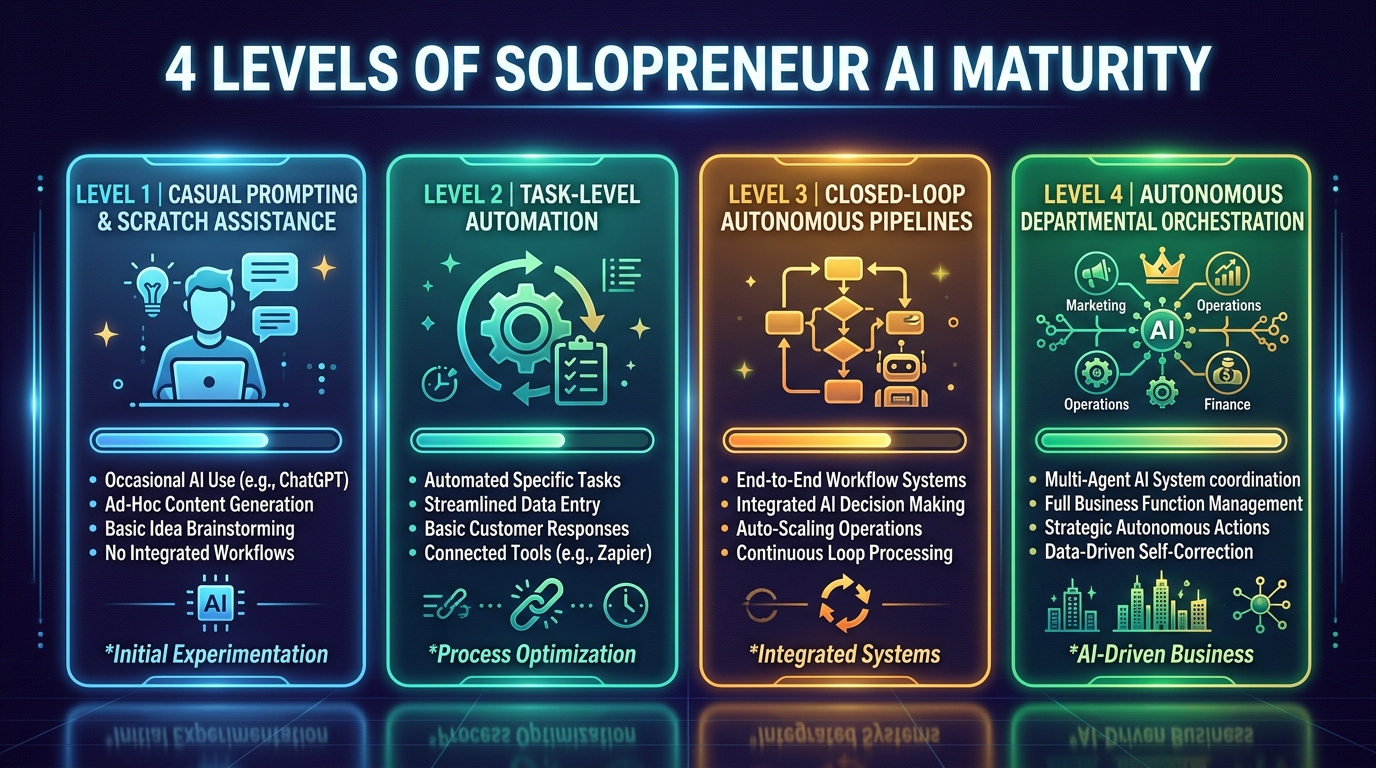
Scratchpad Assistant (Ad-Hoc Prompting)
Opening isolated chat windows whenever stuck. Zero persistent context, highly volatile outputs, and flat or negative ROI due to extensive manual editing.
Task-Level Automation
Employing basic connectors (Make, Zapier) to auto-publish social snippets or log leads into spreadsheets, reclaiming 10-15 operational hours monthly.
Closed-Loop Autonomous Pipelines
Powered by Standard Operating Procedures (SOP) and Single Source of Truth (SSOT). AI autonomously scouts market intel, drafts content, executes quality gates, and reports outcomes on schedule.
Autonomous Multi-Department Orchestration
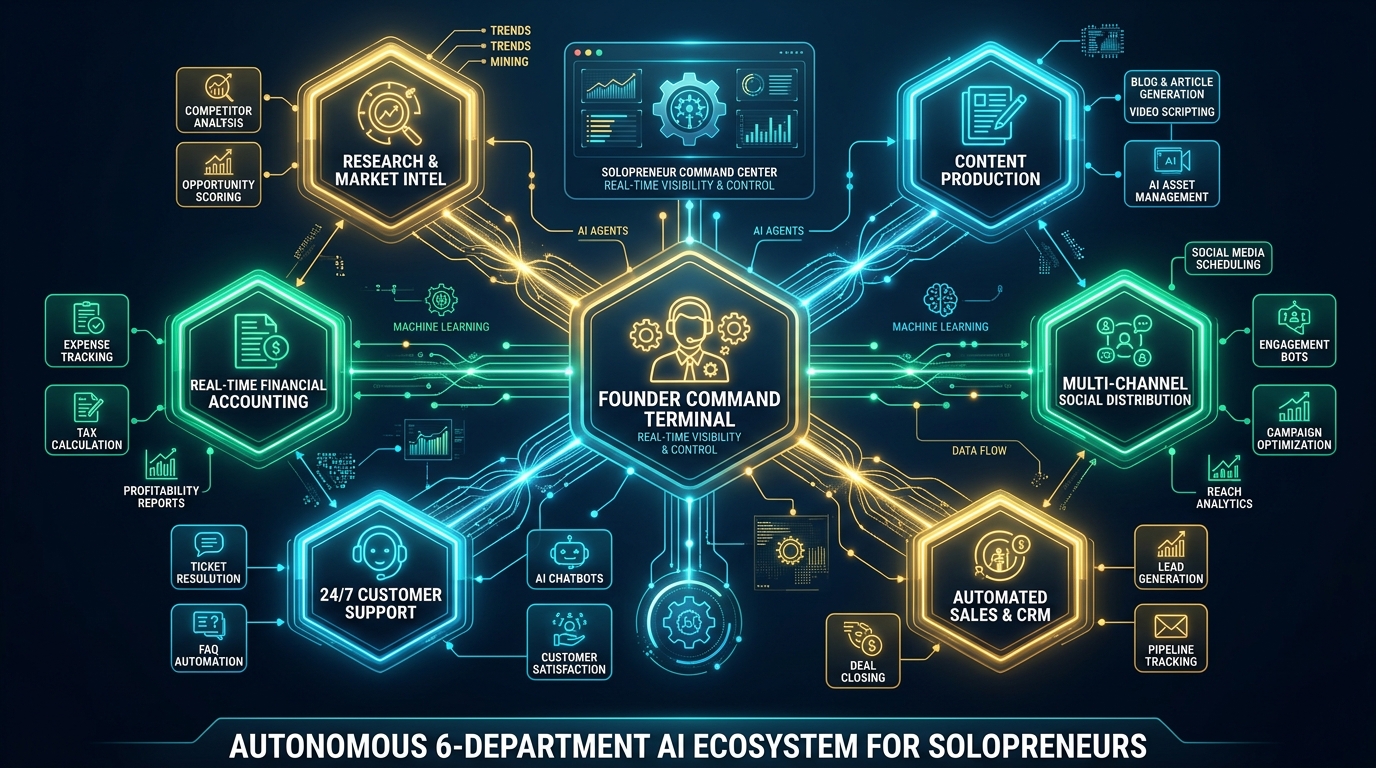
A solopreneur executive orchestrating 6 digital departments (Intel, Content, Distribution, Sales/CRM, Support, Accounting), acting strictly as the strategic decision gatekeeper while liberating 80% of human labor.
04 4-Step Roadmap to Turn AI into a 'Profitable Autonomous Workforce' Operating 24/7
To elevate your enterprise from Level 1 to Level 4 without bloated payroll overhead, execute this lean 4-step deployment blueprint:
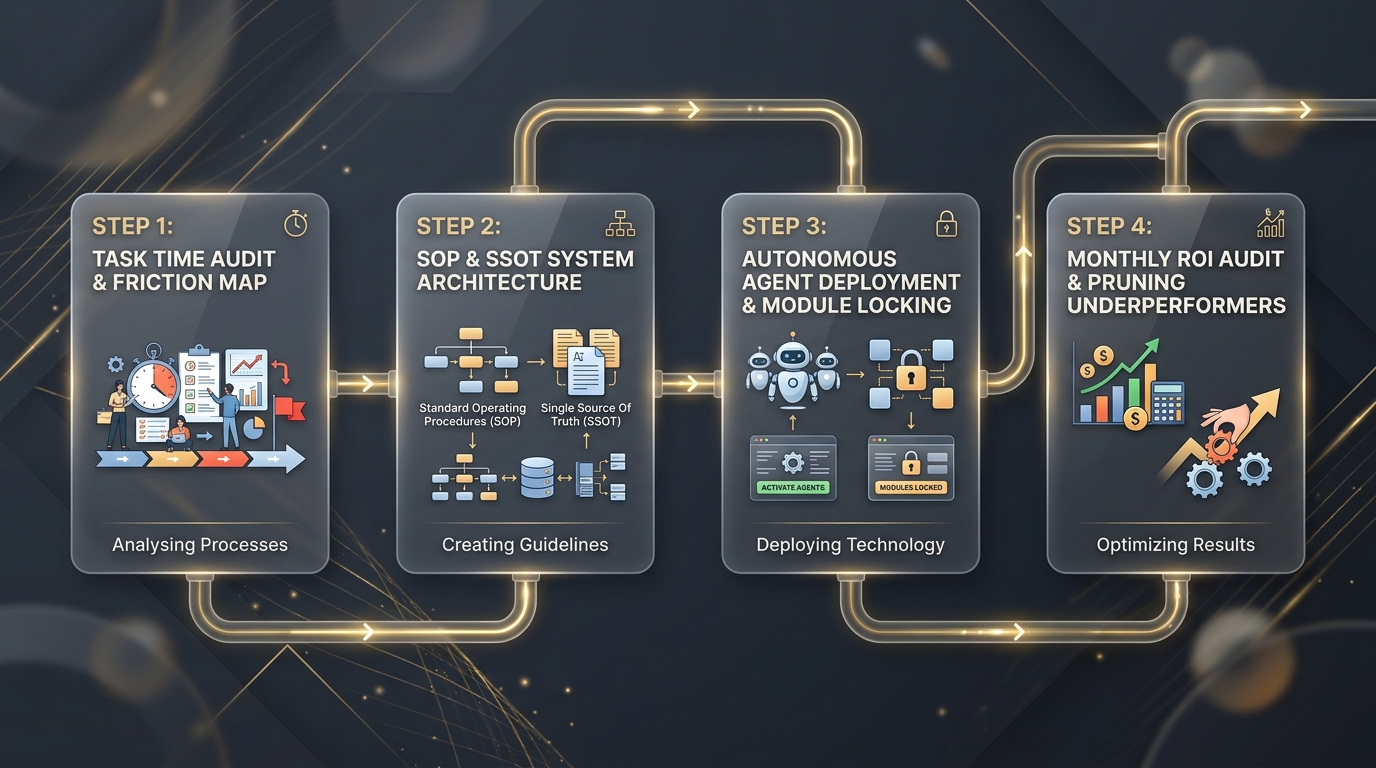
Log every manual activity across 3 full working days: quoting client emails, formatting financial sheets, cropping graphic assets, drafting social posts. Any task repeating more than 3 times weekly is an immediate prime candidate for AI automation.
Never force AI to guess your intent. Codify step-by-step rules, benchmark templates, and tone profiles into explicit markdown SSOT files. When fed canonical ground truth, first-pass output quality reaches 95% without manual touchups.
Configure schedule-driven and event-driven headless runners. For example: 07:00 morning market intelligence scan, 13:00 automated blog publishing, 20:00 daily financial reconciliation pushed directly to your private Telegram.
At the close of every month, audit your ROI ledger: Which software drives demonstrable time and revenue gains? Which apps incur recurring subscription charges without yielding output? Ruthlessly cancel dormant subscriptions to maximize net profit margins.

Download Free Solopreneur AI ROI & Productivity Calculator (Excel / Sheets)
A plug-and-play spreadsheet pre-programmed with software cost reconciliation formulas, time-savings valuations, and monthly net financial surplus projections for solopreneurs.
High-Leverage Automation Solutions in the GEMRAL Ecosystem
AI Monetization: 30 Days to Autonomous Team
Scale from one person into an automated 6-department AI organization, building a lean digital enterprise from scratch.
GEM Scanner PRO: Real-Time Flow Scanner
AI intelligence engine scanning market liquidity, filtering false breakouts, and alerting reversal signals 24/7.
Crypto From Ground Zero: Core Fundamentals
A structured roadmap covering wallet security, risk control, and institutional cash flow cycle detection for beginners.
06 Key Takeaways & Jennie's Reflection on High-Leverage Energy
A Personal Reflection from Jennie:
"Dear friend, technology was born to expand human sovereignty and liberate labor. When you master rigorous measurement and architect AI systems with clarity, you reclaim your precious time and vitality. Let machines handle the mechanical drudgery, and preserve for yourself acute insight, profound empathy, and radiant creative intuition."
07 Academic References & Global Productivity Research Frameworks
- Brynjolfsson, E., Li, D., & Raymond, L. R. (2023). Generative AI at Work. National Bureau of Economic Research (NBER Working Paper No. 31161).
- Dell'Acqua, F., et al. (2023). Navigating the Jagged Technological Frontier: Field Experimental Evidence on the Productivity Effects of AI. Harvard Business School Working Paper 24-013.
- McKinsey Global Institute. (2023). The Economic Potential of Generative AI: The Next Productivity Frontier. McKinsey Research Report.
- Davenport, T. H., & Ronanki, R. (2018). Artificial Intelligence for the Real World. Harvard Business Review, 96(1), 108-116.
- Goldman Sachs Global Investment Research. (2023). Generative AI: Hype vs. Reality in Small Enterprise Economics. GS Macro Technology Insights.
- Bessen, J. (2019). Automation and Jobs: When Technology Boosts Employment. Economic Policy, 34(100), 589-626.
- Agrawal, A., Gans, J., & Goldfarb, A. (2018). Prediction Machines: The Simple Economics of Artificial Intelligence. Harvard Business Press.
- Autor, D. H. (2015). Why Are There Still So Many Jobs? The History and Future of Workplace Automation. Journal of Economic Perspectives, 29(3), 3-30.
- World Economic Forum. (2023). The Future of Jobs Report 2023: AI Adoption in Micro-Enterprises. WEF Insight Report.
- Accenture Strategy. (2023). A New Era of Generative AI for Solo Operators and SMBs. Accenture Technology Vision.
- PwC. (2023). Global Artificial Intelligence Study: Exploiting the AI Revolution. PwC Global Insights.
- Chui, M., et al. (2016). Where Machines Could Replace Humans—and Where They Can't (Yet). McKinsey Quarterly.
- MIT Sloan Management Review & BCG. (2022). Achieving Return on Investment from Artificial Intelligence. MIT Sloan Research.
- Gartner. (2023). Top Strategic Technology Trends: Autonomous Systems and Multi-Agent Orchestration. Gartner Technical Analysis.
- Bughin, J., et al. (2018). Notes from the AI Frontier: Modeling the Impact of AI on the World Economy. McKinsey Global Institute.
- Kaplan, A., & Haenlein, M. (2019). Siri, Siri, in My Hand: Who's the Fairest in the Land? On the Interpretations, Illustrations, and Implications of Artificial Intelligence. Business Horizons, 62(1), 15-25.
- Frey, C. B., & Osborne, M. A. (2017). The Future of Employment: How Susceptible Are Jobs to Computerisation?. Technological Forecasting and Social Change, 114, 254-280.
- Huang, M. H., & Rust, R. T. (2018). Artificial Intelligence in Service. Journal of Service Research, 21(2), 155-172.
- Stanford University Institute for Human-Centered AI (HAI). (2024). Artificial Intelligence Index Report 2024. Stanford University.
- GEMRAL Strategic Ecosystem. (2026). Autonomous Solopreneur 6-Department Operating System Manual. Gemral Internal Governance.